
1. Government Debt Is Reaching Dangerous Levels
One of the biggest problems facing the global economy today is the rapid rise in government debt. Several major economies are carrying huge amounts of debt, and the situation is becoming harder to manage. The US government debt is now around 102% of its GDP, close to the level of 106% seen after World War II.

The UK had an even bigger debt burden after the war, with debt reaching 270% of GDP. Countries like Italy are also dealing with high debt levels. This raises an important question: how will governments manage these huge debts in the coming years?
2. How Countries Reduced Debt After World War II
History gives us an important clue. After World War II, many countries managed to bring down their debt levels by nearly 70% to 80%. In the US, debt fell from around 106% of GDP to just 23%. The UK’s debt came down from 270% to 50%, while Italy reduced its debt from 74% to 24%. Strong economic growth, rising productivity and years of high inflation played an important role in this process. These examples show that reducing government debt does not always happen through spending cuts or higher taxes. Economic growth and inflation can also help reduce the debt burden over time.
3. Inflation: A Silent Tax on Your Money
Inflation is one of the most powerful tools available to central banks and governments. It works like a silent tax because people often do not realise how much purchasing power they are losing. When inflation stays high for a long period, the value of money falls. Governments can use this situation to manage their old debts. For example, if a government borrowed money in the past, it can repay that debt with money that has lower purchasing power today. As long as the economy continues to grow, inflation can help reduce the debt-to-GDP ratio. In simple words, governments may allow money to lose value so that their old debt becomes easier to manage.
4. Why Cash and Bonds Could Lose Value
However, this process can create problems for ordinary investors. When inflation remains high, cash and traditional bonds can lose their real value. Money sitting in a bank account may look safe because the amount does not change, but its purchasing power can fall over time. The same problem can affect bond investors, especially when the returns from bonds are lower than inflation. This means that even if your investment shows a positive return, you may actually be losing money in terms of what you can buy with it. Protecting wealth becomes much more important during such periods.
5. Hard Assets Could Become More Valuable
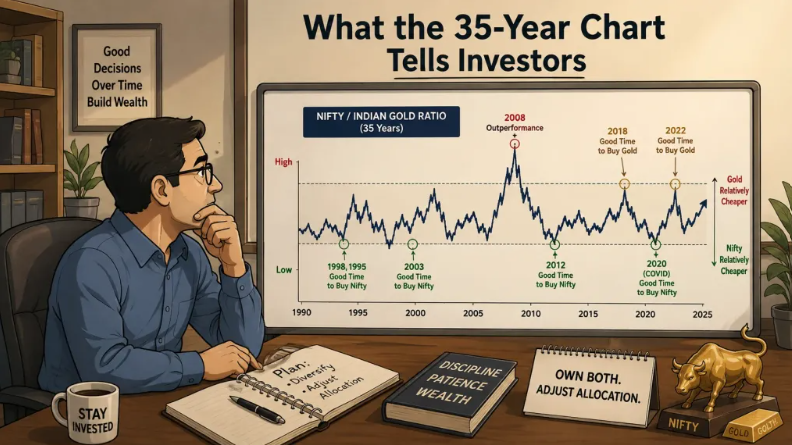
On the other hand, hard and productive assets may benefit from a period of high inflation. Assets that are not heavily dependent on borrowed money can offer better protection against the falling value of cash. Gold, real estate and quality stocks are some examples. Their prices may rise as the value of money falls. This is one reason why gold and real estate have been attracting attention. Good businesses with strong assets and productive operations may also benefit over time. The key is to own assets that can hold their value and grow even when money is losing purchasing power.
6. Protecting Wealth During the Global Debt Reset
The world is going through a major period of debt adjustment. With government debt reaching very high levels, reducing the debt burden will not be easy. Inflation could become an important part of this process, allowing governments to manage yesterday’s debt with today’s less valuable money. But this also means a transfer of wealth and purchasing power from people holding cash and low-return bonds towards owners of hard and productive assets. Investors need to understand this shift and think carefully about where their money is invested. In a world of rising debt and possible long-term inflation, holding productive assets could become an important part of protecting wealth.