
Where is the market headed?
Institutions, banks, and analysts are now projecting a solid 7 to 7.5 percent plus growth rate for the next two years, and the results released during the September quarter serve as a strong testimony to that outlook. Suddenly, the fundamental view on the market has shifted. Foreign investors have pumped close to 8 to 9 billion dollars into the market in just a single month, and that inflow may not stop anytime soon.
While many market participants still hold the thesis that this move is merely a short-term bounce before prices fall again, a major downturn would likely require a genuine global crisis. In reality,

India appears to be weathering global volatility quite well. Even as most Asian markets suffered severe declines, the Indian market escaped with only a minor scratch, showing that things are holding up quite well right now.
Looking across the broader Asian markets, roughly 700 billion dollars in market value was wiped out, with Taiwan falling 7 percent, Japan’s Nikkei dropping 2.5 percent, China slipping 1.2 percent, and South Korea declining 4 percent, alongside weaker US futures.

Major global events are approaching, including Nvidia’s upcoming earnings and the Anthropic IPO, and heightened volatility typically surrounds events of this scale because a massive IPO can drain significant liquidity from the rest of the market. Investors looking to participate in the Anthropic IPO are likely selling off AI and tech stocks to raise funds, which explains how large public offerings can create temporary pressure across the wider market.
Market Overview
Despite these global headwinds, India remained reasonably resilient during the session on the 16th of November. The Nifty refused to buckle at all, edging up 0.58 percent and keeping its short, mid, and long-term trends firmly positive.

Major Market indices
The broader market did experience a slight dip, with small caps losing almost 1 percent, while mid caps and the Nifty Next 50 fell nearly 0.5 percent. Bank Nifty, however, held up remarkably well despite higher inflation numbers and full awareness that the RBI is likely to hike interest rates in December.
Bank Nifty’s strength indicates that it is leading the market higher, continuing the classic pattern where Bank Nifty sets the direction whenever strong upward or downward trends unfold.

Heat Maps
On the Nifty heatmap, HDFC Bank ran hard, while ITC climbed 3.5 percent after jumping rapidly from 250 to 290, accompanied by strength in Nestle and Tata Consumer. This move signals that FMCG, which had been the weak link the market was waiting to see recover, is finally starting to perform, and recent reports indicate that ITC has been the most bought stock in the Indian market over the past month.
On the flip side, there were notable losers as well, with the entire auto space losing ground, including Maruti, Tata Motors, Bajaj, and Eicher, alongside declines in steel and commodity stocks. Bharti Airtel performed strongly and continued flying high after Mr. Mittal recently stated on television that he intends to make the company debt-free very soon. Alongside HDFC Bank’s solid gains, State Bank of India has avoided any real decline over the last five to seven sessions, rounding out a reasonable day on the Nifty heatmap.
The Nifty 500 saw heavier damage, with Kaynes plunging 13 percent. Laurus Labs, which has been a fantastic performer, dropped 8 percent after promoters sold around 500 crores worth of equity, and pharma stocks in general took a beating. Paytm and Tata Motors passenger vehicles also ended lower, while Cummins, ABB, and the broader capital goods space declined as well.


Advance/Decline Trend
Meanwhile, overall market breadth remained weak due to selling in small, mid, and micro caps, resulting in a poor advance-decline ratio of 174 advances to 324 declines.

Sectoral Overview
Across sectors, FMCG led the pack with a 1.87 percent rise, which is encouraging news considering the sector remains the weakest link over a one-year period at minus 14 percent, suggesting there could be more upside ahead. Consumption stocks, banks, the service sector, and private banks all gained nearly 1 percent. Conversely, defense stocks lost ground amid growing talk and rumors that the Iran war may be coming to a close, dampening sentiment in the defense space. The manufacturing index, auto, and real estate sectors pulled back after their recent runs, while metals and pharma fell sharply, though pharma’s decline looks more like a healthy course correction after a heady run rather than a complete U-turn.

Sector of the Day
Nifty FMCG Index
Within the FMCG space, the index has climbed steadily as foreign institutional investors appear to be favoring the India consumption story, lifting Tata Consumer, ITC, Nestle, Godrej Consumer, and United Spirits.


U.S. Market Update
In the previous session, US markets ended mostly lower, with the Nasdaq falling 1.22 percent, the Dow Jones staying flat, the S&P 500 slipping 0.5 percent, and the Russell edging down 0.3 percent. Top gainers included Alnylam Pharma, which has repeatedly featured among the top performers, along with AppLovin Corporation, Airbnb up 3 percent, Workday, and Meta Platforms, which also gained nearly 3 percent.
On the losing side, Nebius Group, a recent top gainer, was smashed down 10 percent, while AMD, Cisco, CoreWeave, and SanDisk suffered heavy losses in the same space. Trading has become extremely challenging for AI and semiconductor stock investors lately, with choppy daily swings of 5 to 7 percent gains or losses becoming the norm, and some of these names could be part of the Weekend Investing US stock strategy.
Across the broader tech landscape, the damage was concentrated in one corner of the market. Apple remained steady while Nvidia moved lower, though Nvidia appears to be stabilizing as recent rumors and accusations fade away, leaving upcoming earnings to guide the stock. Meanwhile, Meta performed well, Google, Microsoft, and Amazon traded flat, and SpaceX and Tesla lost some ground.


Tweet Of The Day
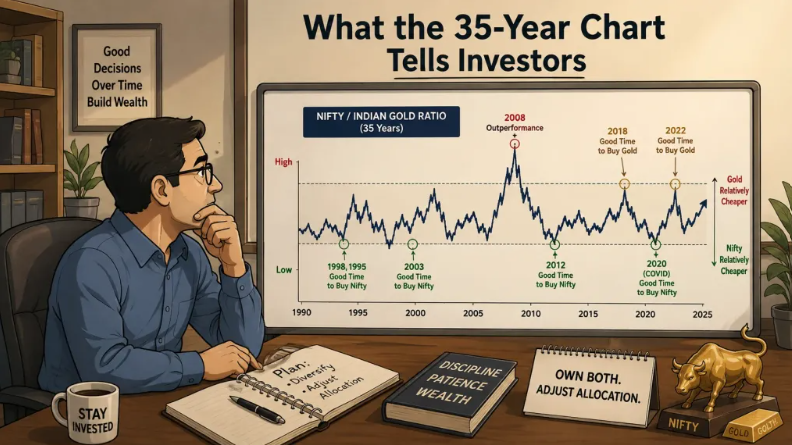
The tweet of the day centers on gold, which has pulled back from 5,600 dollars to nearly 3,850 dollars, prompting many observers to write gold off once again as a pet rock and a useless asset. Looking at the bigger picture, however, brings necessary perspective: over a two-year timeframe, gold is still delivering a higher annual rate of return than its historical average. This drop is merely a correction, and the fundamental story supporting gold remains intact, making a post-Fed rate hike rally next month far from surprising.

From a long-term investment perspective, gold should not be treated as a short-term trading instrument; instead, the focus should be on portfolio allocation rather than daily price fluctuations, which is the exact approach central banks are taking. Morgan Stanley now expects gold to reach 5,250 dollars by Q4 of 2027, representing a potential upside of 30 to 35 percent over the next 14 months if that forecast plays out.
While gold appears to be a compelling buy at current levels, investors should always conduct their own analysis before making decisions.