
Even the Strongest Currencies Lose Value
Money may look safe in your bank account, but its real value keeps falling over time. Over the last 55 years, even some of the world’s strongest currencies have lost a large part of their purchasing power. The Swiss franc has lost around 66% of its value, while the US dollar has lost about 87%.

The Indian rupee has lost nearly 98% of its purchasing power during the same period. Some currencies, such as the Turkish lira and Venezuelan bolivar, have lost almost all their value. This shows how much money can lose its strength over the years.
Your Money Buys Less Than Before
Think about the money people held 55 years ago. Every 100 units of Swiss francs from that time now have the purchasing power of only 34 units. For the Japanese yen, only 29 units remain, while the Singapore dollar has fallen to just 23 units in purchasing power. This means that even when the number in your bank account stays the same, the things you can buy with that money become fewer. You may have the same amount of money, but it may no longer be enough to buy what it once could.
Inflation Makes Everyday Life More Expensive
Inflation is one of the main reasons money loses its purchasing power. As the prices of food, housing, transport, healthcare, and other daily needs rise, the same amount of money buys less than before. The official inflation rate may not always match what people feel in their daily lives. Many families find that their expenses rise faster than they expected. This is why keeping money safe in cash does not always mean keeping its real value safe. Over time, rising prices slowly reduce what your savings can buy.
Cash in the Bank May Not Be Enough
Keeping money in a savings account can feel like a safe choice. However, if your money earns 4%, 5%, or 6% interest while the actual rise in your living costs is higher, your purchasing power still goes down. For example, if your money grows by 5% in a year but the cost of the things you buy rises by 7%, your money loses ground. Cash that sits unused can slowly lose value year after year. This is why it is important to look beyond the amount of interest your bank pays and think about how much your money can actually buy.
Real Assets Can Help Protect Your Wealth
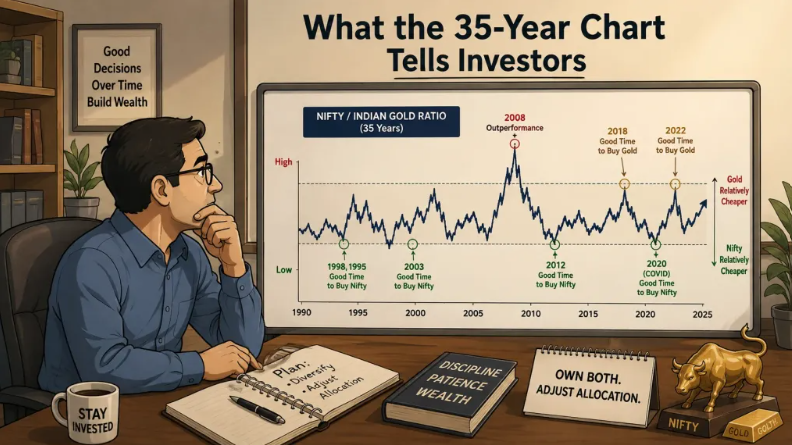
One way to fight the loss of purchasing power is to invest in real and productive assets. Equities, gold, and real estate are some of the options investors can consider. Stocks can give you a share in businesses that grow and earn profits. Gold has often been used to hold value over long periods, while real estate can offer both use and potential income. However, these assets also come with risks, and their prices can fall. The goal is not simply to put money somewhere, but to choose investments that have the potential to grow your wealth over time.
Your Money Needs to Outrun Inflation
Think of your money as running on a treadmill. Inflation keeps pushing the cost of living higher, so your money must work hard just to keep up. If it stays idle or grows too slowly, you may fall behind even if your bank balance increases. Investing can help your money grow and protect your purchasing power over the long term, although no investment can guarantee this result. The important lesson is to look at wealth in terms of what your money can buy, not just how much money you have. The real goal is to make your money grow faster than the cost of living over time.